I did not think I would be writing to you about clothes, but here we are … Last month, our baby turned 13. And, as any teenager would react to being called that, I’m sure he’d issue a stern “Bruh.” But he is our baby. The youngest of five. Our bonus kid (his next sibling is six years older).
Among his birthday gifts were two new hats—one with the Decepticon logo (more of an Autobot guy myself, but I don’t judge) and Dustin’s Thinking Cap from Stranger Things. Rarely sighted without a hat, his favorite is a captain’s hat, which led to me nicknaming him Skip.
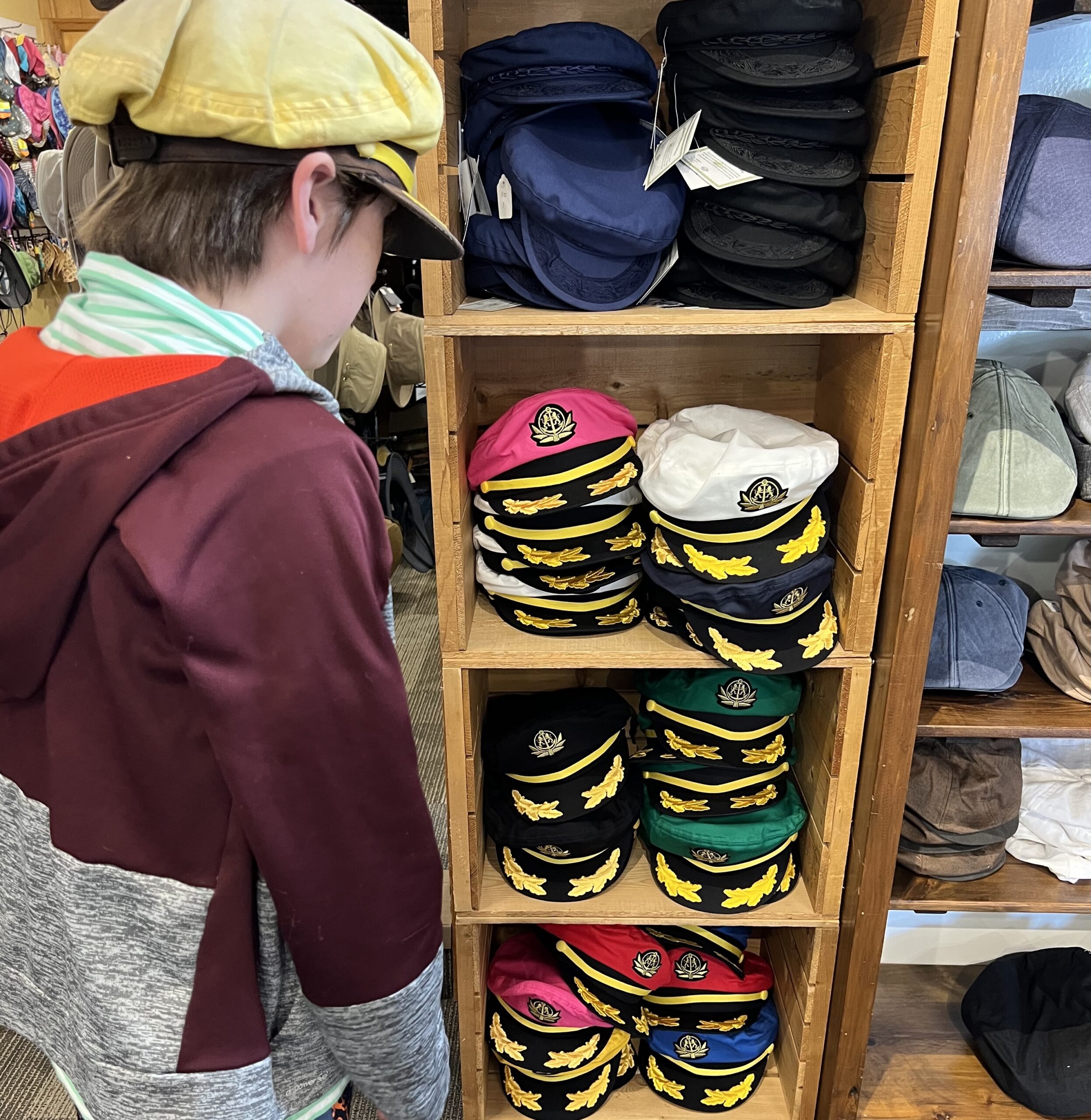
Skip was partway through first grade when COVID hit. When he returned to school, he’d had as much virtual schooling as in-person. Sending him back, we were nervous about everything—including whether or not his teacher would let him wear his omnipresent lid. To our surprise, they embraced it. Because when he’s comfortable about himself and what he’s wearing, he’s not only going to be a better student. He’s likely to feel better.
And that’s the thing. When it comes to the clothes we wear and where we wear them (I had to re-read that phrase a couple of times), we’re given all sorts of advice.
But none of it is really for us.
What They See
“Dress for success.”
“Dress for the job you want to have.”
“Dress one level above other people.”
I’m guessing these sound familiar. That last one kept me in a jacket and tie for years. You may recall that a couple of months ago, I wrote about shedding this consulting uniform in favor of my relaxed educator duds and how it made me feel more like this new version of myself.
Personal branding experts have always advised people to choose what they wear based on how they want to be perceived by others. But there’s something bigger here.
During a recent podcast interview with NeAndre Broussard, founder of Black Menswear, he talked about creating safe spaces to change the conversation around African American men and their clothes. I said it’s almost as though the right clothes can make us feel better.
To which NéAndré said, “Yeah. It’s called enclothed cognition.”
What You Know
Enclothed cognition is the idea that what you wear doesn’t just change how others see you—it changes how you think and behave. As NéAndré elaborated, “Based on what you wear, it actually increases your cognitive ability.”
The term enclothed cognition was coined by Northwestern University researchers Hajo Adam and Adam Galinsky in the Journal of Experimental Social Psychology. In their experiment, participants who wore a white lab coat described as a doctor’s coat performed better on tasks than those given the same coat described as a painter’s coat. Same coat. Different meaning. Different results. But why?
What you wear subtly primes your own focus, confidence, authority, creativity, and risk tolerance. Task performance in an experiment is great, but what does this experiment have to do with my son’s hats—and, most importantly, you?
It’s simple. If you put on something that symbolizes precision, you’re more likely to act the part. That’s why athletes feel locked in when they’re in their uniform. Or other people (not me!) when in formal wear. Your wardrobe isn’t just branding for others. It’s behavioral design for yourself.
Speaking of playing the part, in his memoir Future Boy, Michael J. Fox describes returning to his hometown outside of Vancouver for a gala in his honor—wearing a tux with custom Converse sneakers stitched with a skull and crossbones. His dad was there. And his dad did not approve. But every time Fox looked down at those shoes, he was “reminded of my true self.”
We all want to be the best version of ourselves. We want to do well at school, at work, and at home. That story starts with what we choose to put on and why. Maybe it’s something special like a captain’s hat. Or maybe it’s something you don’t wear (ties, wingtips). Your story starts every morning in front of the mirror.
Story Strategy: Dress for Your Story
The clothes you wear tell a story—make sure it’s yours.
Apply it: What do you wear when you feel like the best version of yourself? Maybe it’s a hat. A pair of shoes. A favorite jacket. That feeling isn’t random—it’s enclothed cognition at work. As GI Joe reminds us, knowing is half the battle. Once you know what works, wear it intentionally—not for the room, but for yourself.
 A version of this first appeared in Story Strategies—my monthly email newsletter designed to help you connect with your audience through the power of story. Get the next issue delivered to your inbox.

